This is where my work begins: creative research, restless questions, and the writing that follows.
Para mim, pesquisa criativa é onde os fatos encontram a emoção, onde o peso da história se transforma em narrativa. É sobre aprender a carregar o que você descobre—as cartas arquivadas, as vozes esquecidas, as verdades desconfortáveis—e transformá-las em histórias que respiram e ressoam. A pesquisa não deve prender sua escrita; deve libertá-la, aprofundando personagens, enriquecendo lugares e honrando a complexidade da experiência humana.
Pesquisa Criativa
To me, creative research is where the weight of history becomes story, where facts meet emotion. It's about learning to carry what you discover—the archived letters, the forgotten voices, the uncomfortable truths—and transforming them into narratives that breathe and resonate. Research should serve the story, not overwhelm it. Deepening character, enriching place, and honouring the complexity of human experience.
Creative Research
-
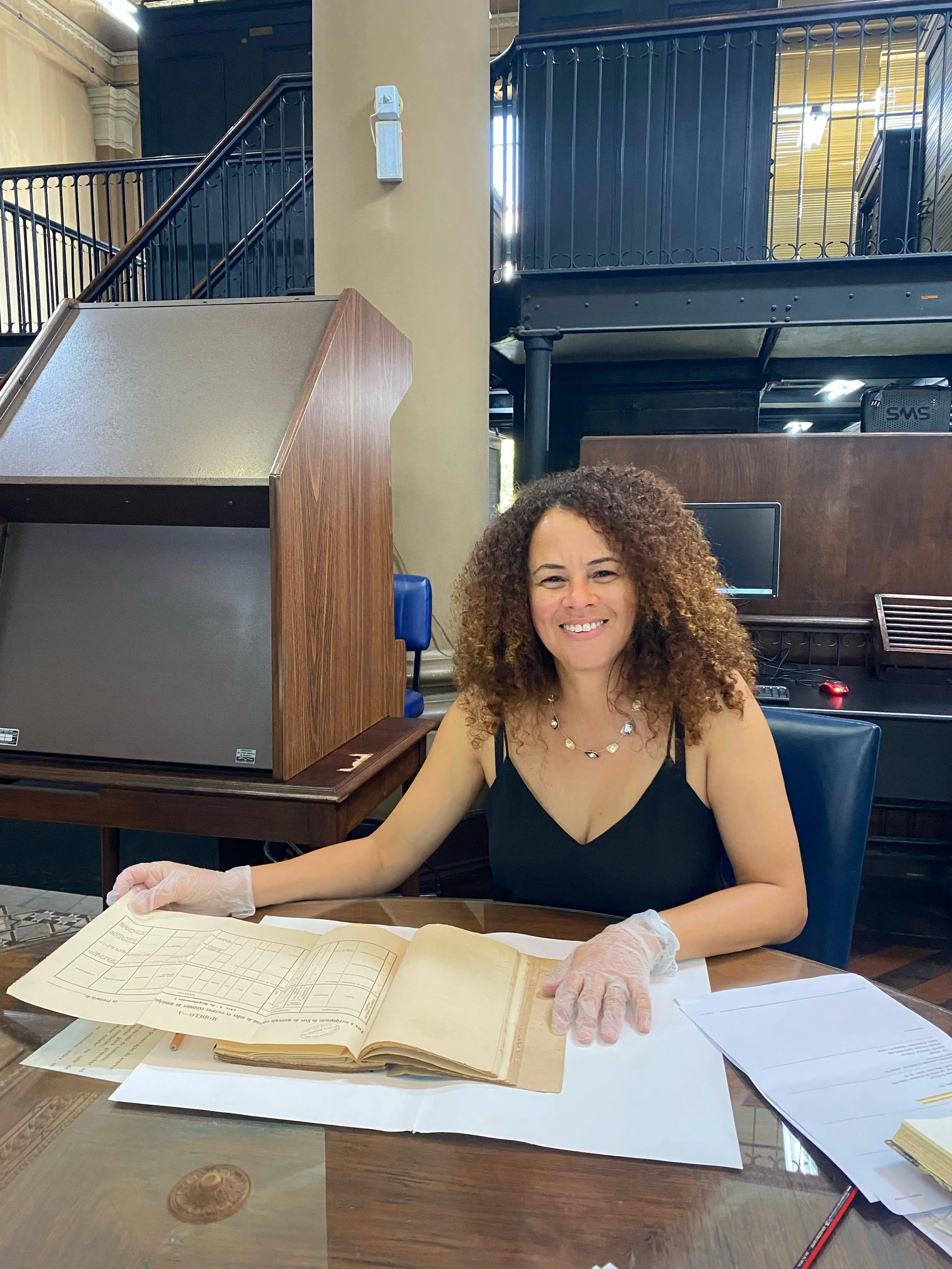
After receiving the Neilma Sydney Literary Travel Fund (Australia), I traveled to Brasil to research slavery for a literary manuscript. It was a chance to reconnect with my homeland and uncover stories deeply connected to my family history.
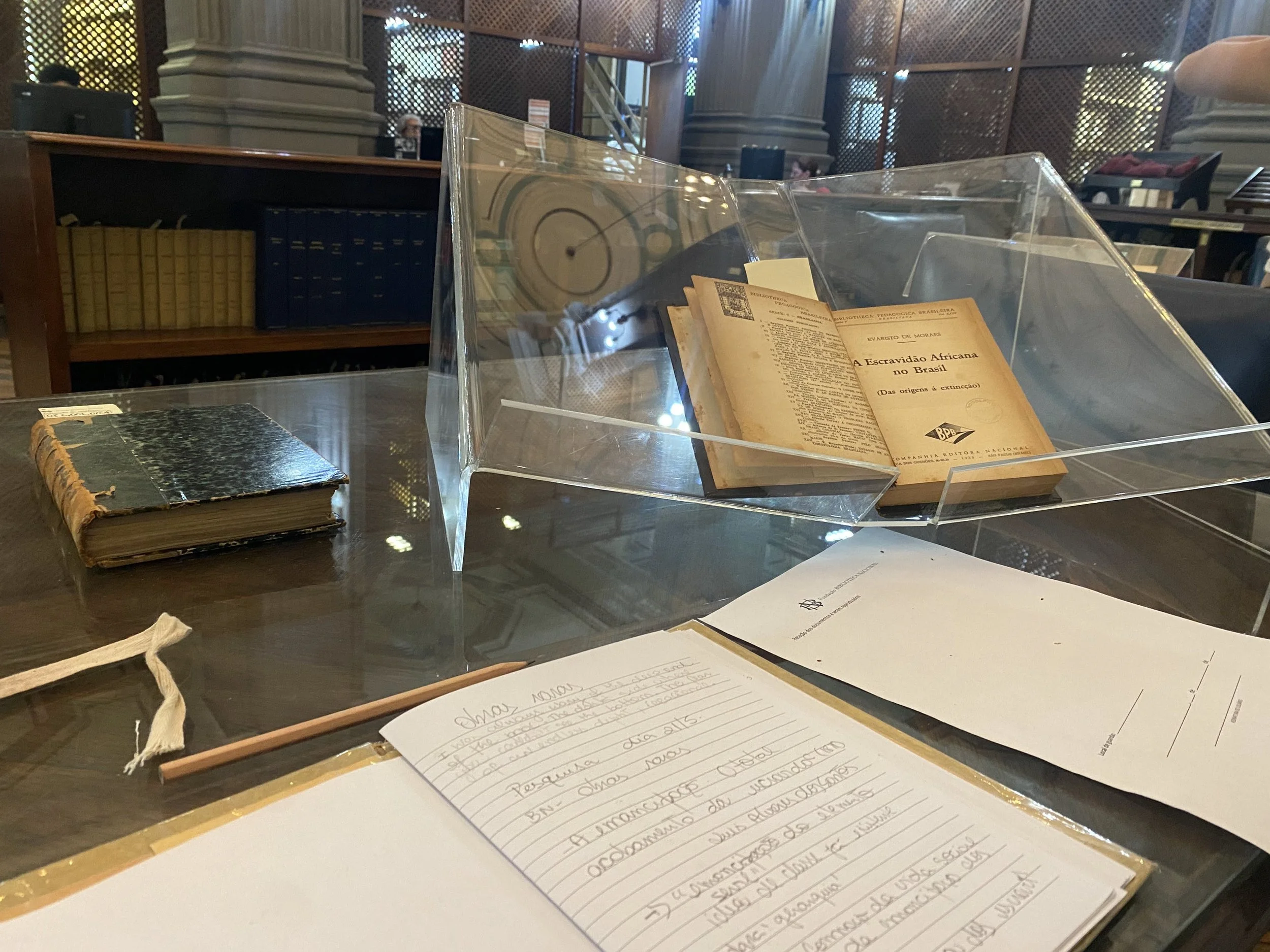
I focused on the last fifty years of slavery in São Paulo, organising visits to rare collections at Biblioteca Nacional, Museu Nacional, and Museu da República. But I also left space for discovery.
My research gave me three words: resistance, serendipity, duality. I wouldn't have found them if I hadn't stayed open – building relationships, listening, allowing myself to feel the weight of what I uncovered.
This experience taught me that creative research doesn't let you stay detached. It asks you to carry what you find and transform it into something that honors both facts and human experience.
-
Research is a conversation between what you seek and what finds you.
I work across three types of research, each offering different approaches to the narrative:
Primary Research
Direct engagement with sources—interviews, field visits, archives. This is where you find the texture of truth: the weight of a letter in your hands, the smell of old paper, the way a place makes you feel.
Secondary Research
Building context through existing material: books, documentaries, academic papers. This grounds your story in broader understanding and helps you ask better questions.
Experiential Research
Drawing from lived experience and observation. Sometimes the most powerful research is paying attention to your own memories, your family stories, the world around you.
Examples from my work: My connection to Afro-Brazilian heritage; observing contemporary Brasil; the emotional resonance of returning home.
-
The challenge isn't gathering research, it's weaving it into narrative without overwhelming the story.
Research should deepen your writing, not weigh it down. Below is how I try to integrate my research.
Through Character
Research informs who your characters are. Their voices, expertise, worldview, and motivations. A botanist speaks differently than a historian. A character shaped by economic hardship makes different choices than one who isn't.
Through Place
Settings become richer when grounded in research; not just physical details, but the cultural, historical, and emotional layers that make a place breathe.
Through Theme
Research can reinforce what your story is really about—the underlying questions and tensions that give it resonance.
-
I realised that the process is rarely straightforward. The lessons below it is what I took from my last experience, and I believe they are worth sharing.
Embrace Serendipity
The best discoveries often aren't what you were looking for. A casual conversation, an unexpected document, a museum you stumbled into. Stay open to what finds you. Some of my most powerful material came from moments I hadn't planned.
Things will fall through
Meetings get cancelled. Archives close unexpectedly. Interviews don't happen. Have backup plans. Can you watch a documentary instead? Schedule a video call later? Find another way to get the information? Flexibility matters more than the perfect plan.
Build Genuine Relationships
If you're interviewing researchers, reading their work, or seeking information from communities, be honest about why you're asking. Keep communication open. Show genuine interest. These relationships can become ongoing sources of insight—and they deserve respect.
Know when to stop
Research can become procrastination. You'll reach a saturation point where more information doesn't serve the story. Trust your gut. When the research starts repeating itself, or when you feel the pull to write—it's time to stop gathering and start creating.
Manage the Emotional Weight
Some research, especially around trauma, injustice, or loss, will affect you. I've cried in archives. I've had to take breaks. This isn't weakness; it's proof you're paying attention. Direct that emotional energy into your writing when it becomes too much.
Stay Organised, stay sane
Label your photos. Transcribe audio notes. Keep a notebook handy for thoughts that strike at odd moments. Future you will be grateful when you can actually find that crucial detail you recorded six months ago.
Creative research is messy, emotional, and deeply rewarding.